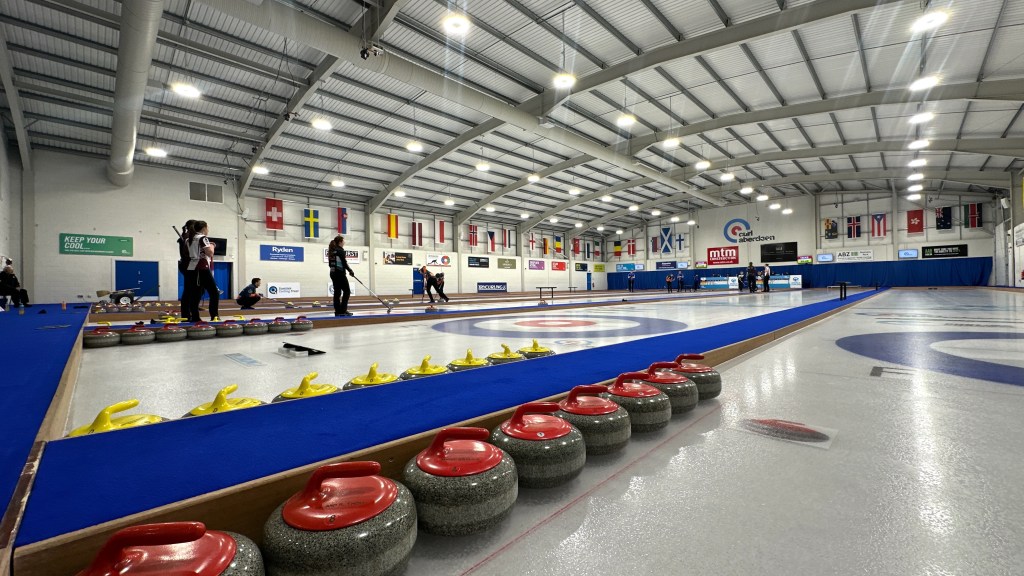
A first opinion piece from our Features Writer Finlay Williams:
I, like many other curling fans, am delighted with the Rock League announcements and the rapid expansion of the Grand Slam since The Curling Group took over shop in April of 2024. In my eyes, providing more exposure to the sport we love in the build up to the Winter Olympics next month is huge for potential viewership, and making all the matches free to view on Rock Channel can only be seen as a positive, as well as the exciting news that our sport’s finest talent can finally go professional is an incredible incentive for more players and teams to take further steps into the sport.
However, one thing I have been wary of since I started watching curling properly around five years ago is the domination of the same four or five countries at the tour level.
Yes, there has been progress. The recent Canadian Open was the first ever event in twenty-five years of Grand Slam curling that there was no Canadian representation in the semi-finals in either the men’s or the women’s event at Tier 1 level. But a short look at the entry lists for each event still proves my point. Canada, Scotland, USA, Japan and Switzerland made up 19 of the 28 entries across both Tier 1 competitions. That is far too much lopsidedness in a sport that should be aiming for viewership worldwide.
What I am trying to get at is: while professionalisation at the top of the sport has accelerated rapidly, the foundations of international curling are being quietly left behind.
I’m from Aberdeen, and we have had the delight of hosting each of the last four editions of the World Mixed Curling Championship. Sadly, there was no tournament in 2025 as the Olympic Pre-Qualifier took priority, but in my eyes, the Mixed represents everything curling should aim to be as a sport.
It is one of the only open event in World Curling’s calendar currently, not including pre-qualifiers, Junior, or Senior events, and every year Aberdeen has hosted the event has truly been a pleasure to watch, even if the sheer quality of curling isn’t as high as it may be at tour level. I have been fortunate enough to get to know people from Hong-Kong China, India, England, Puerto Rico, Nigeria, and so many others in recent years through curling, and speaking to people from these up-and-coming nations has provided a real eye–opener into the struggles that these sides go through for funding, trying to find members and, being able to afford more facilities, if there even is one in the first place.
Players from these smaller nations are paying out of their own pocket to represent their country at these events, and yet next-to-no publicity or attention is provided. Couple that with no prize money at any World Curling event (making us one of very few sports to offer no monetary incentive to becoming World Champion) and it means that curling is a very difficult sport for other federations to break into.
These smaller federations need all the help they can get to make the next step in their journey, and whilst the likes of Lithuania and Austria have provided true underdog stories in the World Women’s and Men’s championships respectively, these are sporadic and usually forgotten about after the event as the curling audience focuses on the next Slam event.
It is good that up to 18 teams can now qualify for the World Championships per gender in an event, but the abolition of both the Pan Continental Curling Championships and European B- and C- Championships is a complete shot in the foot by World Curling (and that isn’t just because I was desperately looking forward to seeing Hong-Kong China Men in the PCCAs next season!).
Whilst this has been replaced by a World B- and C- Championships, which on paper will provide a wider range of opposition for these smaller nations, cost of travel really is an issue that World Curling need to factor into their decision making. The recent Olympic Pre-Qualifiers held in Aberdeen were rather poorly attended, with only 12 nations sending delegations to attempt to qualify for what is deemed to be the biggest international festival of winter sports.
Many athletes I have spoken to, who I was looking forward to seeing at the qualifier, weren’t able to attend due to the travel costs, and this also affects federations ability to put up teams in junior events, and also depletes funds for facilities, competitions and other events to grow curling in their areas.
Whilst I am not expecting World Curling to chuck money at teams for mere participation, there are logical steps that World Curling can take to ensure the progression of the sport at a professional level over the last two years can be fairly reflected across other associate members internationally.
Whilst prize money would be an added bonus, the simple equation is more exposure equals more recognition. World Curling have a fantastic media/commentary team which I was lucky enough to witness in person when I worked as a statistician at the 2024 European As, held in Aberdeen, but they are only contracted to work on site at the major events in their calendar, completely neglecting events like the Mixed, Seniors, or B/C rated events at European and Junior level.
I fully appreciate that World Curling has a limited amount of talent on their books, but there are plenty of freelance journalists out there, myself included, who I am sure would bite your hand off for the ability to work with World Curling for an event or two a year on the sport that they love. It is the community effort of curling, after all, that is its most valuable asset in my eyes.
If events such as the Mixed got the exposure that the higher up competitions got, I can almost guarantee that more people would take up ‘the roaring game’, as more international representation means more role models from across the world from aspiring athletes to look up to, which will lead to more revenue in the back pocket of rinks and federations, and an altogether more prosperous curling community, or indeed, collective worldwide.
And it isn’t as though there wouldn’t be rich storylines either. In just the 2024 edition of the Mixed, debutants Puerto Rico took an end off eventual champions Sweden, a team of fifteen-year olds represented Romania, and Kenya went viral for a phenomenal, if completely fluked, takeout against Germany after unintentionally peeling the long guard. There were also match wins for the likes of Nigeria, Brazil, India, a phenomenal 3-4 record for the guys and girls from Hong-Kong China, four of the nicest people you’ll meet, and an improbable run to the playoffs for Slovenia. Just from the top of my head, that is four or five decent articles you could post on the World Curling website, and some short-form interview opportunities for the social media side as well, notwithstanding the cringeworthy TikToks we all know and love.
You will soon find that, especially around the Olympic cycle, that sports fans from the Philippines, Poland and the like, won’t be tuned in to the GSoC, because they have no team to root for. But the moment you place these countries together in one tournament, viewership worldwide will increase, more people will respond to the call to arms (or brooms) and try curling, and curling will have successfully cracked the sports market in the elusive areas such as Africa, South America, and the Middle East where curling is yet to be taken seriously.
Overall, my message is this: we have a decent system already, we just haven’t harnessed it yet. Although it would be nice, World Curling doesn’t need Jared Allen’s millions, and certainly not his curling, in order to reach these far-flung destinations they are desperate to tap into. It also doesn’t need to go around chopping and changing competition formats which are already fine as is. What it does need, however, is significantly more media exposure, advertising, and eyes on the sport. The only way to do that is to mobilise.
Ultimately, the message is a simple one: curling already has a system capable of sustaining global growth, it just hasn’t been fully utilised yet. World Curling does not need vast external investment, nor does it need to constantly reinvent competition formats that already serve their purpose. What it does need is a far greater commitment to visibility. More media coverage, more storytelling, and more eyes on the sport at every level are the most effective tools available, and they are also the most achievable. If World Curling is serious about expanding into new regions and strengthening its membership base, then mobilising its existing media resources more widely is the logical place to start.
I have developed a deep appreciation for international curling beyond the elite level over the past four years, in many ways more so than for the Slam or main tour events themselves. While the future of professional curling is exciting and long overdue, it cannot come at the expense of the federations operating with limited funding, facilities, and exposure. These nations are not peripheral to the sport, they are fundamental to its growth, its diversity, and its identity. If they are left behind as the professional game accelerates, the gap between the traditional powers and emerging nations will only widen, and curling risks undermining the inclusive, global community that has always been its greatest strength.

Leave a comment